Cruising Cost Control
Money Saving Tips
by Linda Coffman
 |
|
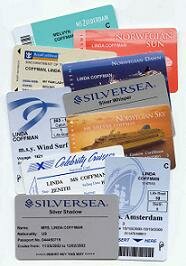
Boarding pass, room key... ultimately, it's a "Sail 'n Spend" card
|
Charge, charge, charge and you can see the cost of your cruise vacation rising faster than a helicopter over Alaska's glaciers.
Holding down the add-on expenses isn't easy—after all, it's your vacation, you deserve it, and you want it to be special. However, there are ways to keep those costs minimal.
Air fare
Start in the planning stages. Most cruise lines offer air and sea packages that save you the trouble of hunting for and booking your own flights, but they may not be the most cost-effective choice. You may be able to save a tidy sum by searching for a discounted fare on the Internet or by using the miles you've accumulated in an airline frequent flier program.
By arranging your own air, you'll be responsible for transfers between the airport and ship. However, a real bonus is that you may save enough not only for transfers, but also for a pre-cruise hotel stay. It's always great to arrive early to unwind and to insure that you won't miss the boat—a real possibility with airline delays and cancellations.
Beverages
Whether or not to BYOB (Bring Your Own Beverages) is a hot cruise passenger topic. Many cruise lines look the other way at soft drinks and bottled water toted by embarking passengers, but they are increasingly intolerant of allowing them to bring alcoholic beverages on board. A bottle of wine or champagne for a special occasion are usually okay, but don't even think of carting on a case of beer. If you must BYOB to save money, stick to soft drinks. Or, be creative and send yourself a cost-effective bon voyage gift of your favorite spirits to be delivered to your stateroom by the cruise line.
Bar drinks and wine typically cost about what patrons would expect to pay at a nice lounge or restaurant in a resort or at home (depending on where you live). Keep in mind, unless you really want a souvenir glass as a keepsake, order your umbrella drinks in regular glasses—you will pay extra for the fancy glass. Wine by the bottle is a more economical choice at dinner than ordering it by the glass. Any wine you don't finish will be kept for you for the next night. Gifts of wine or champagne ordered from the cruise line (either by you, a friend, or your travel agent) can be taken to the dining room. Wine from any other source will incur a "corkage" fee of approximately $8-10 per bottle.
Naturally, tap water is always plentiful and free. Why not bring along a powdered drink mix such as Crystal Light for a flavorful and refreshing change? An insulated cup or mug makes it easy to prepare and keep chilled—cabin stewards keep ice buckets filled in passenger staterooms. Or, order up a pitcher of fruit juice from room service. Juices are complimentary and a healthy choice.
In lounges, order the less expensive "bar brand" mixed drinks or the reduced price drink-of-the-day. On some ships discounted "beverage cards" for unlimited fountain soft drinks and/or a set number of mixed drinks are available. Be sure to attend the Captain's Welcome Aboard party where complimentary drinks are usually served and, if you are a repeat passenger, don't miss the repeaters' get together for the same reason. It really isn't fun to sit around drinking in your cabin and a big part of a cruise is the sociability found in public areas of the ship.
Casinos & Games of Chance
Just don't go there if you can't afford losing your vacation cash. On the other hand, feeding a $10 roll of quarters into a slot machine can be entertaining, as can a session of Bingo. Determine if you can afford to lose your "seed money" and play responsibly, if at all.
Photographs
Smile for the ship's photographers. Portraits can be a lasting memory of your cruise, but you are under no obligation to purchase them. Take your own camera and ask a fellow passenger to snap your photo. If your camera is digital, you won't even have to pay for developing.
Food
Yes, you can spend extra on alternative dining in fancy restaurants at sea. However, there isn't any need to. You can eat yourself into oblivion in the dining rooms, buffets, or by ordering room service at no additional charge on almost any ship. For a special treat and the low cost of about $15 to $30 per person, you can experience a really upscale dining experience.
Some ships have high-end ice cream stands and coffee bars that charge for these treats. No need to put extra charges on your account for them, though. Complimentary ice cream is often served during the late afternoon in the buffet area and offered as a dessert selection in the dining rooms. Free coffee and tea are usually are available 24-hours a day someplace on most ships and an insulated mug brought from home can be handy to fill up at the beverage station.
Gratuities
Tipping is one of the most personal and controversial aspects of cruising. Some luxury lines, such as Seabourn, Regent Seven Seas, Silversea Cruises, and SeaDream Yacht Club, include tips in the cruise fare; other cruise lines do not and you are strongly encouraged to reward good service. Most cruise lines suggest a tipping guideline and some even add those amounts automatically to on board accounts. If you wish to adjust the amount, simply do so at the Purser's Desk.
Internet Access
This is a good time to point out that ship-to-shore telephone calls are very expensive—ranging from $6 to $10 a minute. Most ships are wired for Internet access these days and email is a far cheaper way to stay in contact with the office or family. Connections can run from 50 cents to a dollar a minute and often are slow. If your cruise ship has a 'package' deal of a certain number of minutes for a set fee, you will often pay less per minute. However, if you can wait until you arrive in ports of call, shoreside Internet cafes are often inexpensive and have fast connectivity.
To save money while online, set up a simple web-based email account with Yahoo. Accessing Yahoo is universally very fast and you can get web-based email anywhere in the world. Don't use the email address assigned to you on your cruise ship; it's almost always more expensive than using a web-based mail account.
Cell Phone Access
Your cell phone is another option to the pricey cabin phone. Most ships offer cell phone access these days, so check with your phone service carrier to determine whether they have an agreement with the cruise line's service provider. In addition, you will also have to enable international roaming in order to use your phone on board and in most ports. Per minute charges will be billed by your mobile phone service company.
Laundry, Pressing & Dry Cleaning
These services can really add up, especially laundry, as charges are per item and the rates are similar to those charged in hotels. Top category suites on some cruise lines, such as Silversea Cruises and Holland America Line, include complimentary laundry service. If doing laundry is important to you and you don't want to send it out to be done, look for a cruise ship that features a low-cost or free self-serve laundry room (they usually feature an iron and ironing board in addition to washer and dryer). An alternative is to wash hand laundry and hang it to dry in your bathroom. Tuck a small bottle of laundry liquid and clothes pins in your suitcase.
Don't bring along a travel iron to touch up wrinkled garments! Irons are a fire hazard. Instead, pack a clothing steamer or hang wrinkled items on the bathroom door while you take a steamy shower. Wrinkles should fall out.
Medical Treatment
No one wants to contemplate getting sick or having an accident during their cruise, but unfortunate things can happen. Most group insurance policies do not cover members when they are out of the country and Medicare assuredly does not. Check your coverage before leaving home and consider purchasing travel insurance for peace of mind and unexpected contingencies. It can be a wise investment because the cost of a typical policy may run about the same as a trip to the ship's doctor.
Shopping
You may feel it's your duty to shop, but it won't be free. Ship boutiques are stocked with jewelry, tee-shirts, crystal, fancy formal wear, and liquor and cigarettes at duty-free prices. What they don't carry, you will find in shops at nearly every port of call. Limit your purchases to necessities and try not to forget essentials such as your toothbrush—items we take for granted often cost far more on a cruise ship than at the local drug store.
Shore Excursions
These can carry a big price tag, so select them wisely. Shore excursions range from a simple half-day bus tour for less than $50 per person to exotic adventures and helicopter flights that can run hundreds of dollars per person. Some tours are cheaper if you arrange them yourself, either by contacting a tour operator ahead of time or hiring a guide when you arrive in port. In the latter case, the per person cost can be cut even further if you share your guide and transportation with another couple.
Spas, Salons, Personal Trainers & Specialized Exercise Classes
Modern cruise ships have elaborate spa and salon facilities that offer a menu of massages, body wraps, facials, and skin treatments as well as hair and nail services for both sexes. Unless your cruise plans include this type of pampering, get haircuts and manicures before leaving home and bring along your own polish for fingernail touch-ups. Many ships also have therapy pools, steam rooms, and saunas. Steam and sauna are generally included in the cruise fare; the use of thermal suites and therapy pools often are not. You may be able to get a free mini-spa treatment or hair styling by volunteering on embarkation day to be the "demo" person during their spa and beauty presentation.
Large cruise ship gyms feature an array of exercise machines available without charge. Also complimentary are most simple aerobics and exercise classes, but some specialty classes (such as yoga) and personalized instruction are extra. If there is any question in your mind, ask about fees before you join a class. Walking and jogging around the deck are always free and offer the benefit of invigorating sea air.
Sports
The cost of a simple day at the beach can skyrocket if you rent snorkel gear, floats, and other water toys. While there's nothing you can do to cut down on the cost of a jet ski rental, you can save money by bringing along some of your own toys. Discount and sporting goods stores sell snorkel gear relatively cheap and a blow-up rubber raft can cost as little as a few dollars. Take your own and if you don't want to bother carrying them home, give them away—you can really delight a local youngster with a simple gift and save money to boot.
Scuba tours are often offered for certified divers, but independent arrangements can be made with a local dive shop and you can bring your own gear. Golfers may avoid equipment charges by bringing their own clubs, but should be prepared for hefty greens fees at resort courses.
Luggage Handling
With wheeled luggage you can manage it yourself and avoid the open palms of airport skycaps and hotel porters. Do not stiff the stevedores at the pier, though. You want your bags to make it on the ship, not land in the water.
Just a reminder... make sure your luggage doesn't exceed the airline's weight limit and allowance for the maximum number of checked suitcases. Airlines now tack on a variety of fees these days, so check ahead and you won't be unpleasantly surprised at the airport.
Parting Words
On the last morning of every cruise there are increasingly frantic announcements requesting that so-and-so report to the Purser's Office to settle an on board account. I've often speculated whether or not they overextended their credit card limit. A bit of pre-planning not only will make all the difference in the enjoyment of your cruise, but it can also take a lot of the worry out of straining your resources.
Related... What IS & Is NOT Included In Your Cruise Fare
Air & Sea Programs: How They Work
A (Cruising) Pirate's Cache (how to get freebies on board)
Tech Savvy Cruise Travel: The services offered by major cruise lines.
Strategies for smart Shopping on Your Cruise Vacation
Obtain A Passport
What You Should Know About Travel Insurance
Luggage Limitations for Cruisers