 Just the Cruising FAQs
Everyone goes on their first cruise at least once and deciding to take the plunge can be daunting. With an array of decisions to make, and to insure your experience is as satisfying as possible, we’ve anticipated some of your concerns. To embark with confidence, learn more about cruising…
I want the most bang for my vacation buck. Aren’t cruises expensive? “Brochure” shock is similar to the “sticker” shock experienced by new car buyers—don’t let cruise brochure prices intimidate you. As a rule, never pay the “retail” fare for a cruise. Cruise lines offer a number of discounts, for instance for early booking, repeat passengers, and groups traveling together. In addition, your travel agent may be able to offer special fares on certain sailings. Brochure rates are directly related to seasonal demand and discounts are calculated from them, but it’s unlikely that you’ll get a low rate in a peak period such as Christmas or New Year’s.
If you can afford a vacation, you can afford a cruise. With everything that’s included in your cruise fare, you’ll find a cruise is often less expensive on per day basis than a land-based resort vacation.
What’s the big deal with all the different cruise lines, aren’t all ships alike? Definitely not! The quality and ambience varies greatly from cruise line to cruise line and ship to ship. Cruise through some of the Cruise Line Profiles to compare them.
Ship size... which is better—large or small ships? The size of the vessel is actually a very important consideration in determining the overall cruise experience. Take an in-depth look at why Size Matters.
What is included in the fare? Your cruise fare includes accommodations, meals, basic beverages, most activities, entertainment, taxes, and port charges. Sometimes “free” airfare and transfers to and from the ship are also included or can be purchased as part of an Air/Sea package.
What isn’t included? You’ll be responsible for anything of a personal nature that you buy—soft drinks, alcoholic beverages, casino gambling, Bingo, photographs, shore excursions, spa treatments, and medical services. It goes without saying that ship-to-shore telephone calls and onboard Internet services aren’t included in your fare.
Won’t I feel cooped up on a ship at sea?With the vastness of the sea and an uncluttered horizon all around you, it’s hard to imagine feeling closed in. Cruise ship cabins are on the small side and if you suffer from claustrophobia, be sure to book an outside stateroom, or—even better—one with a balcony.
What type of identification do I need? Passports are uniformly accepted worldwide and are the best type of identification. A passport is considered valid if it does not expire within six months of your cruise termination date. At present, the minimum required of US citizens for cruises that leave from and return to the same US port is either a passport; an original or certified copy of a birth certificate and a photo ID; or naturalization papers and a photo ID.
Acceptable photo IDs are: state driver’s license; state, federal, or local government-issued picture ID cards; US company employee ID cards; or ID cards issued by private identification card services. Voter’s registration cards are not adequate on their own but can be used to support your citizenship. Social Security cards are not acceptable for identification purposes.
Non-US citizens who reside in the United States should have a valid Alien Registration (green) card. All others must have a valid passport and any required visas.
Failing to have proper documentation will result in refusal of the cruise line to allow you to board—and no refund! Find out how to apply for a passport.
Do I need a fancy new wardrobe for a cruise? Do I have to “dress” for dinner? No and yes. You probably have everything you need in your closet. Most cruise ship’s suggestions for dressing up are determined by the evening’s dress code—Casual, Informal, and Formal are the norm. If that’s not your style, look for a ship that adheres to informality. Cruise Diva has you covered with suggestions and tips on Cruise Wear—Cracking the Cruise Lines’ Dress Codes.
Isn’t insurance a waste of money? For peace of mind, absolutely NOT. Cruise Diva shares everything you need to know about Cruising Insurance.
How do I book a cruise? While it is possible to make reservations directly with some cruise lines, it is usually not to your advantage. Dealing with a cruise specialty travel agent, particularly one who is a Cruise Lines International Association (CLIA) member, can usually result in significant savings and overall satisfaction. CLIA cruise counselors undergo a demanding training program, including touring or sailing on a specific number of ships. They make it their business to know all they can to serve their clients' needs.
A factor to consider is that many cruise travel agents belong to consortiums. The consortiums book blocks of cabins on a number of ships, thus enabling them to pass along "group" savings to individuals. Just because a travel agency is small doesn't mean they can't get you the bargains offered by bigger "name brand" agencies.
You've found a jewel of an agent, then what? Sit down and talk. Get to know one another. And above all else, be honest about your expectations and budget. Seldom can a travel agent guess what your interests are and how much you can afford to spend. Don't be shy—if you have champagne taste and a beer budget, SAY SO.
Can I celebrate a special occasion? Make sure your travel agent knows if you’ll be celebrating a birthday, anniversary, or other special occasion and your waiter will have a cake for you at dinner. Once on board, double check your request with the maître d’ at least a day before the event.
For honeymooners or romantics, some cruise lines offer special packages for a fee. Including such things as premium champagne, breakfast in bed, logo bathrobes, and portraits in commemorative frames. The packages are a nice luxury—find out more in Romance at Sea.
Will my electrical appliances work? Most modern ships catering to American passengers are equipped with American and European-style outlets for either 110v or 220v appliances. If your ship belongs to a cruise line that caters to a European or International clientele, you may need a plug adapter or a transformer for appliances that are not dual-voltage.
Is there a laundry onboard? Many modern ships are equipped with self-service laundry rooms, but they are not available on all ships. Most ships have laundry and dry-cleaning services and offer one-day service. Why not let them do it for you? After all, you’re on vacation.
Can I stay in touch with the office? Yes, making (or receiving) a telephone call from your cruise ship cabin is as simple as calling across town. Charges for ship-to-shore telephone calls and faxes are billed to your account at applicable rates. Internet Cafes with access to the World Wide Web and email are common on today’s cruise ships. Your cell phone may even work while at sea, depending on whether the ship has that service. Check with your cell phone provider before leaving home to find out how to enable International Roaming.
Help! Will I get seasick? This really depends on your own personal propensity for motion sickness. Modern cruise ships are stabilized and the most popular cruise areas tend to be in calmer waters, especially true of the Caribbean. However, stabilizers only control the roll (side to side motion) of the ship and if a storm is brewing or waters are rough, you could still experience pitch—the motion of the ocean from bow to stern (front to back). A variety of remedies are available to cure or even prevent mal de mer. Explore your options in Seasickness~Rockin’ the Boat.
What if I get sick—is medical treatment available? Facilities vary from ship to ship, but qualified physicians and nurses are at hand to provide medical care at customary fees. See Cruise Care for more info on “sick bay”—the ship's infirmary.
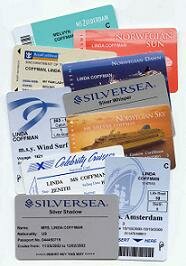
How do I pay for extras onboard? Cruising is “cashless”—you will be issued a “charge” card at check in and your purchases will be added to your onboard account. Before the end of the cruise you will be required to settle up with the Purser, either in cash, travelers checks, or with the major credit card you registered upon embarkation. It’s quite possible to spend a week on a cruise ship and spend very little on extras—or a lot.
How is tipping handled? This varies widely between cruise lines—all the way from suggested gratuity guidelines, to tips included, to no tipping required, to no tipping allowed. We wish we could say it’s handled discretely, but some cruise lines make a big deal out of it. Most cruise lines now either automatically charge gratuities to your on board account on a daily basis or provide small envelopes conveniently labeled “cabin steward ” and “waiter” etc. to put the money in at the end of the cruise. Consider the level of service you received and feel free to adjust these amounts accordingly. For even more information on tipping, see the article, Cruise Tipping TIP$.
Who will my fellow passengers be? People just like you with a thirst for adventure and exploration or the desire to simply get away from it all. Everyone’s cruising—couples, families, singles, old and young.
What is there to do? Anything or nothing at all—it all depends on your taste. While some passengers enjoy the organized activities and games (pool games, Bingo, trivia), evening entertainment, or the casino action, others are happy to find a secluded spot to enjoy a good book. A cruise offers a great opportunity to spend time alone with your special someone as well.
I’m not much of a “joiner”—do I have to participate? No, but you may be surprised by the number of things to do that might catch your fancy. “Theme” cruises are often planned that center around a special interest or musical style. Would you like to have lunch seated with your favorite sports hero or recording artist? Anything’s possible.
Are tours necessary in port? In Bermuda, the Bahamas, and Caribbean islands where English is widely spoken, you can often forego the cruise ships’ shore excursions and either rent a vehicle or hire a taxi to tour independently. Sharing transportation with other like-minded passengers can result in significant savings.
Depending on your comfort level, in far-flung foreign ports there are advantages to organized tours that outweigh any money you might save touring on your own. If you are the adventurous type who finds satisfaction in conquering public transportation, by all means go it alone. On the other hand, an organized ship’s tour usually maximizes your time ashore, provides the convenience of a guide who speaks English, and offers the security that the ship won’t leave without you if your bus is late returning to the pier. When the site you want to tour is more than a couple hours from your port city it’s probably wise (and no more expensive) to sign up for the excursion. See Cruise Diva's Ports of Call pages for information on what to see, shopping, and beaches.
Of course not everyone disembarks in port—there are often a few passengers who opt for the tranquility of a nearly deserted ship.
How do I decide between early and late dinner seatings? Think about your lifestyle and what time you serve meals at home before deciding which seating is preferable. Most families with small children select the early seating, as do many seniors.
Times can vary from ship to ship, and even day to day on the same cruise. Some ships serve “open seating” breakfasts and lunches when in port. On sailings with a high percentage of European or South American passengers, dinner times are often scheduled as late as 9:00pm to adhere to international customs.
Casual dining alternatives to the dining room schedules are often available. The ship’s daily newsletter will list serving times for all dining venues and room service is generally served on a 24-hour basis.
Some small or luxury ships have “open seating” for all meals, allowing passengers to dine when, where, and with whom they please. You'll even find that convenience offered on mainstream fleets; for example, Norwegian Cruise Line, Princess Cruises, and Holland America Line.
For an in-depth look into how your choice of seating can make or break your cruise, see the Early vs. Late Seating Dining article.
I have special dietary concerns. Can they be accommodated? Most cruise ship dining room menus have alternative selections for passengers requiring heart healthy, fat-free, low-salt, vegetarian, and other special meals. Spa selections featuring light fare have become common. If you have an unusual dining request, tell your travel agent and ask that the cruise line be contacted to determine if it can be fulfilled. Once on board, double-check with the maitre d’hotel to insure your satisfaction.
If I don’t like my table companions, what should I do? Sometimes you just don’t hit it off with your assigned dining partners, or you meet other people you’d like to spend more time with. Go to the maître d’ as soon as possible to make your request for a change. Be patient—he will do his best to accommodate all requests but often changes aren’t made on the spot.
More from CruiseDiva.com:
Articles & Advice
Cruise Reviews
Cruise Line Profiles